
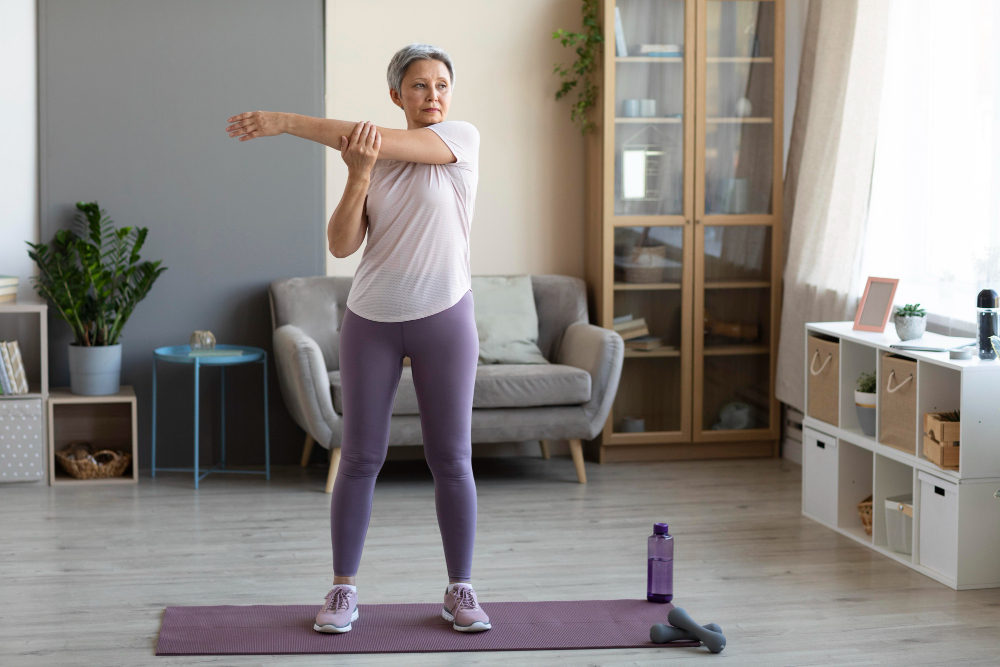
Introduction: Why Exercise Matters for Women Over 60
Staying active is important at any age. However, exercises for 60+ women are especially vital for health and independence. As we age, our bodies change. For example, muscles may weaken, and balance can decrease. Yet, regular movement helps keep you strong and steady. In fact, safe exercises for senior women can boost energy, mood, and overall well-being. Whether you live in the US, India, or anywhere else, the right routine can make daily life easier and more enjoyable.
Benefits of Regular Exercise for 60+ Women
Regular activity offers many rewards. Not only does it help control weight, but it also supports heart health. Moreover, it can lower the risk of falls and injuries. Here are some key benefits:
According to the CDC, even light activity can make a big difference for older adults.
Safety Tips Before Starting
Before you begin any new routine, safety comes first. Even though exercise is helpful, it is important to avoid injury. Consider these tips:
For many women, following these steps helps prevent injuries and builds confidence.
Recommended Exercises for 60+ Women
There are many safe exercises for senior women. In fact, a mix of activities works best. Below are some top choices, based on physiotherapy routines for women over 60:
Strength Exercises
Balance Exercises
Flexibility Exercises
Aerobic (Cardio) Exercises
According to the World Health Organization, adults over 60 should aim for at least 150 minutes of moderate activity each week.
How to Start and Maintain a Routine
Starting a new habit can feel hard at first. However, small steps make it easier. Try these ideas:
Remember, even short sessions add up over time. Consistency is key for the best results.
When to Consult a Physiotherapist
Sometimes, you may need expert help. For example, if you have pain, joint problems, or a recent injury, a physiotherapist can guide you. They create safe, effective physiotherapy routines for women over 60. In addition, they can adjust exercises for your needs. Always seek advice if you are unsure about any movement or if you notice new symptoms.
Prevention and Lifestyle Guidance
Besides exercise, healthy habits matter. For instance, eat a balanced diet rich in fruits, vegetables, and lean proteins. Also, get enough sleep and manage stress. Avoid smoking and limit alcohol. Moreover, regular check-ups help catch health issues early. Together, these steps support a strong, active life.
Conclusion
In summary, the best workouts for elderly females are safe, simple, and enjoyable. With the right exercises for 60+ women, you can boost strength, balance, and well-being. Before you begin, consult a physiotherapist at On Go Physio for personalized advice. Stay active, stay healthy, and enjoy every step of your journey.